The Watch That Refuses to Look Fake: LS Factory’s Royal Oak Offshore Breakdown
There’s a reason the Audemars Piguet Royal Oak Offshore sits at the absolute top of the replica watch conversation. It’s not just the price tag of the genuine article — pushing well north of $30,000 for steel variants — it’s the sheer complexity of its construction. The octagonal bezel, the integrated bracelet architecture, the signature “Méga Tapisserie” dial texture, the crown protectors, the pushers. Every single element screams authenticity or screams fake, with almost no middle ground. LS Factory has taken a long, hard look at where previous replicas failed and built something genuinely worth talking about.
This is a full craftsmanship deep dive into their upgraded Royal Oak Offshore reference — and we’re going to obsess over the details that actually matter.
The Dial Texture Problem: Why Most Royal Oak Offshore Replicas Fail Immediately
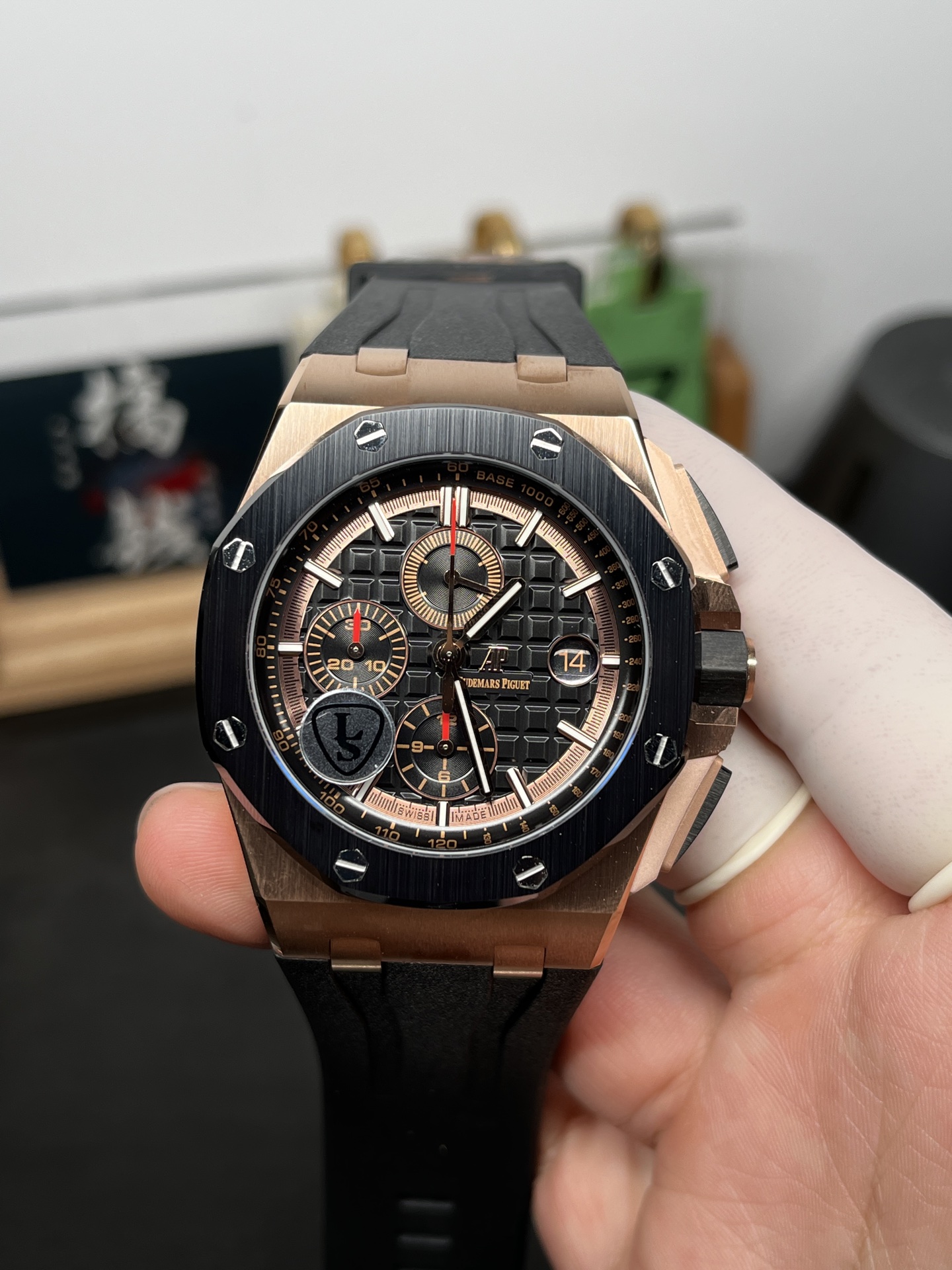
Let’s be brutally honest about the industry’s dirty secret: the Méga Tapisserie dial pattern is the single hardest element to replicate on any Audemars Piguet Royal Oak. On the genuine Offshore, those raised square “hobnail” checks are machined with extraordinary precision — each square is perfectly formed, sharply defined at the corners, and the entire grid is geometrically flawless across the entire dial surface. The iconic feature isn’t just the pattern itself. It’s the way each square connects to its neighbor through a subtle cross-shaped junction point, creating a three-dimensional textile illusion that catches light differently at every angle.
Cheaper replica manufacturers cut corners here in the most obvious way possible: they use hydraulic press stamping to imprint the pattern. The result is a dial that looks mushy, soft-edged, and frankly unconvincing under any decent light source. The squares lose their crispness. The cross-junctions blur together. The whole effect collapses.
CNC Slow-Milling: The Game-Changer in Dial Manufacturing
LS Factory’s upgraded version addresses this head-on. The dial is now produced using CNC slow-milling technology — a dramatically more time-intensive and expensive manufacturing process that machines each individual texture element with computer-controlled precision. The difference is immediately visible and tactile. Under magnification, the squares are sharp. The edges are defined. And critically, that signature connecting cross pattern between each square is now rendered correctly — each square is visually “linked” to its neighbors through those cross-shaped intersections, exactly as Audemars Piguet’s Geneva artisans intended.
This is not a cosmetic upgrade. This is a fundamental change in how the dial is manufactured, and it’s the single most important improvement in this entire release. Collectors who have handled genuine Royal Oak Offshore pieces will recognize the difference immediately when comparing this to older hydraulic-pressed replicas.
Steel That Actually Looks Like Steel: The 316L Case Construction
The case material conversation in the replica world is one that gets glossed over far too often. Most budget replicas use 304-grade stainless steel — it’s cheaper, easier to machine, and frankly adequate for casual wear. But it lacks the chromium and nickel balance that gives genuine luxury steel its particular brightness and resistance to surface oxidation.
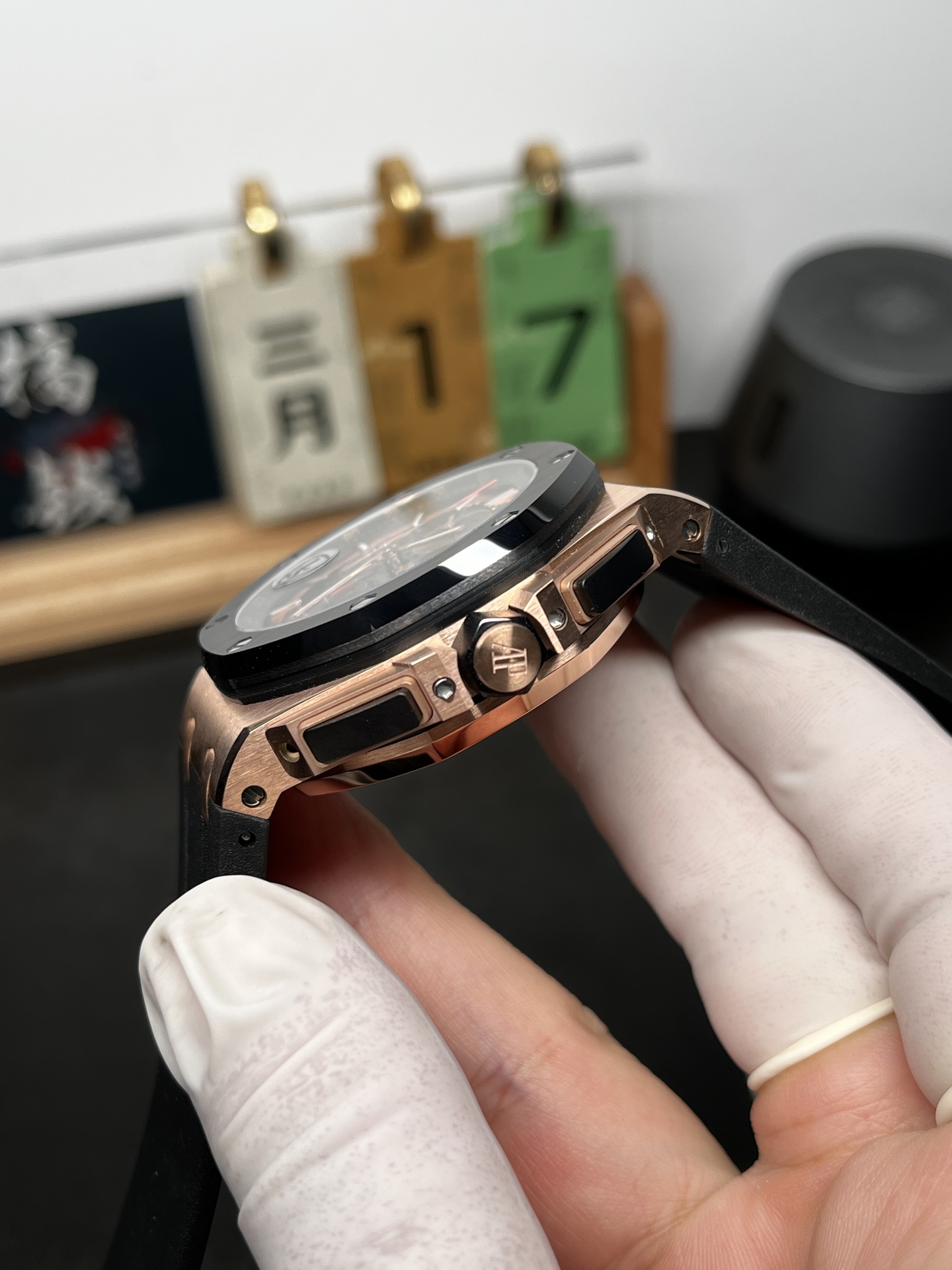
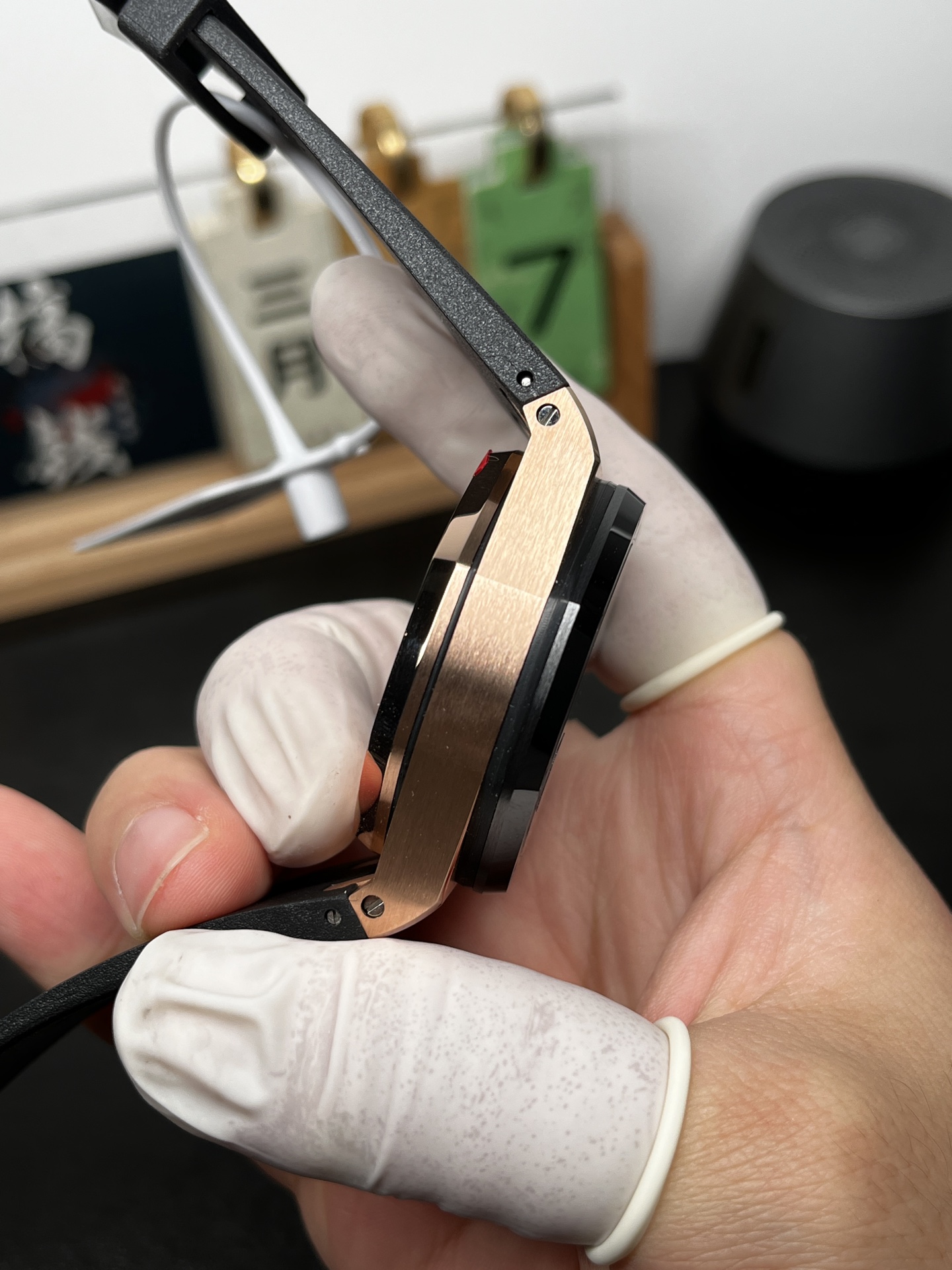
LS Factory specifies Japanese 316L stainless steel for the Royal Oak Offshore case — the same grade used by Rolex and, broadly speaking, the same family of alloys used by Audemars Piguet in their steel sports references. The result is a case that carries that characteristic cool, bright luster that luxury steel is known for. When you place this watch next to a replica built from standard 304 steel, the visual difference in surface quality is genuinely apparent. The brushed and polished surfaces interact with light more convincingly, and the overall impression of quality is substantially elevated.
The Royal Oak Offshore’s case is architecturally demanding — those octagonal bezel lugs, the integrated crown protectors, the complex geometry of the case sides all require precise machining. 316L steel machines cleanly and holds edge definition well, which means the architectural lines of the case stay sharp rather than rounding off during finishing.
The Ceramic Bezel: Color Options and Material Authenticity
The genuine Audemars Piguet Royal Oak Offshore uses ceramic for its bezel insert across several key references, and it’s a material choice that serves both aesthetic and functional purposes. Ceramic is extraordinarily scratch-resistant, color-stable over decades of wear, and carries a depth of tone that no coated metal can replicate.
LS Factory sources Korean-imported ceramic for the bezel, available in black, blue, and green variants. Korean ceramic manufacturing for watch bezels has reached a genuinely impressive standard — the material is dense, the color saturation is deep, and the scratch resistance is real. The bezel sits against the sapphire crystal and the 316L steel case with the kind of material contrast that makes the genuine Offshore so visually compelling.
Sapphire Crystal: The Non-Negotiable Element
Paired with the ceramic bezel is a sapphire crystal — not mineral glass, not hardlex, actual corundum sapphire. On a watch with this level of case and dial investment, anything less would be an embarrassing compromise. The sapphire here carries anti-reflective coating, allowing clean visibility of the dial across a range of lighting conditions.
The Movement Inside: Shanghai 7750 Modified to Cal.3126 Specification
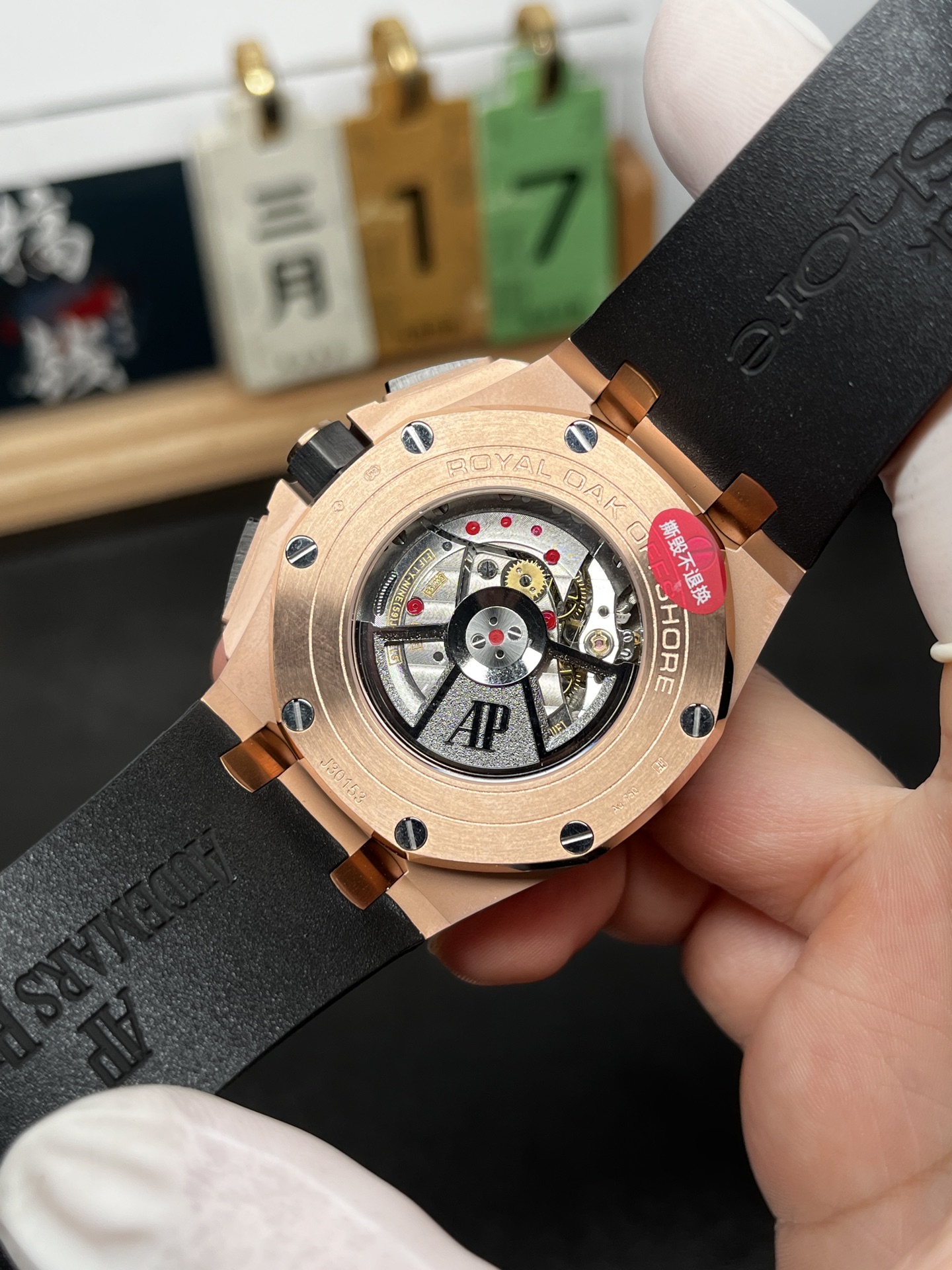
The genuine Audemars Piguet Royal Oak Offshore runs on the Calibre 3126, which is itself based on the Jaeger-LeCoultre 2895 architecture with an integrated chronograph module. It’s a movement of genuine horological significance, and replicating it faithfully presents real challenges.
LS Factory’s approach is pragmatic and honest: they use a Shanghai-built 7750 base movement modified to Cal.3126 specification, configured as a small-seconds display at the 12 o’clock position rather than a running seconds subdial. This is a legitimate and well-executed approach — the Shanghai 7750 is a robust, well-regulated movement with a strong track record for reliability in the replica segment.
The Magnified Date Window Upgrade
One detail that separates this upgraded version from previous iterations is the enlarged magnification lens over the date window. On the genuine Offshore, the date aperture is clean, legible, and properly magnified. On lesser replicas, the date sits flat and small, immediately betraying its origins. The upgraded magnifier on this LS Factory version corrects that visual discrepancy and contributes meaningfully to overall authenticity at a glance.
The Strap: Fluoroelastomer Done Right
The Royal Oak Offshore is, at its heart, a sports watch — the “offshore” designation is not decorative. Audemars Piguet fits genuine Offshore references with rubber straps, and the quality of that rubber matters enormously for both comfort and visual authenticity.
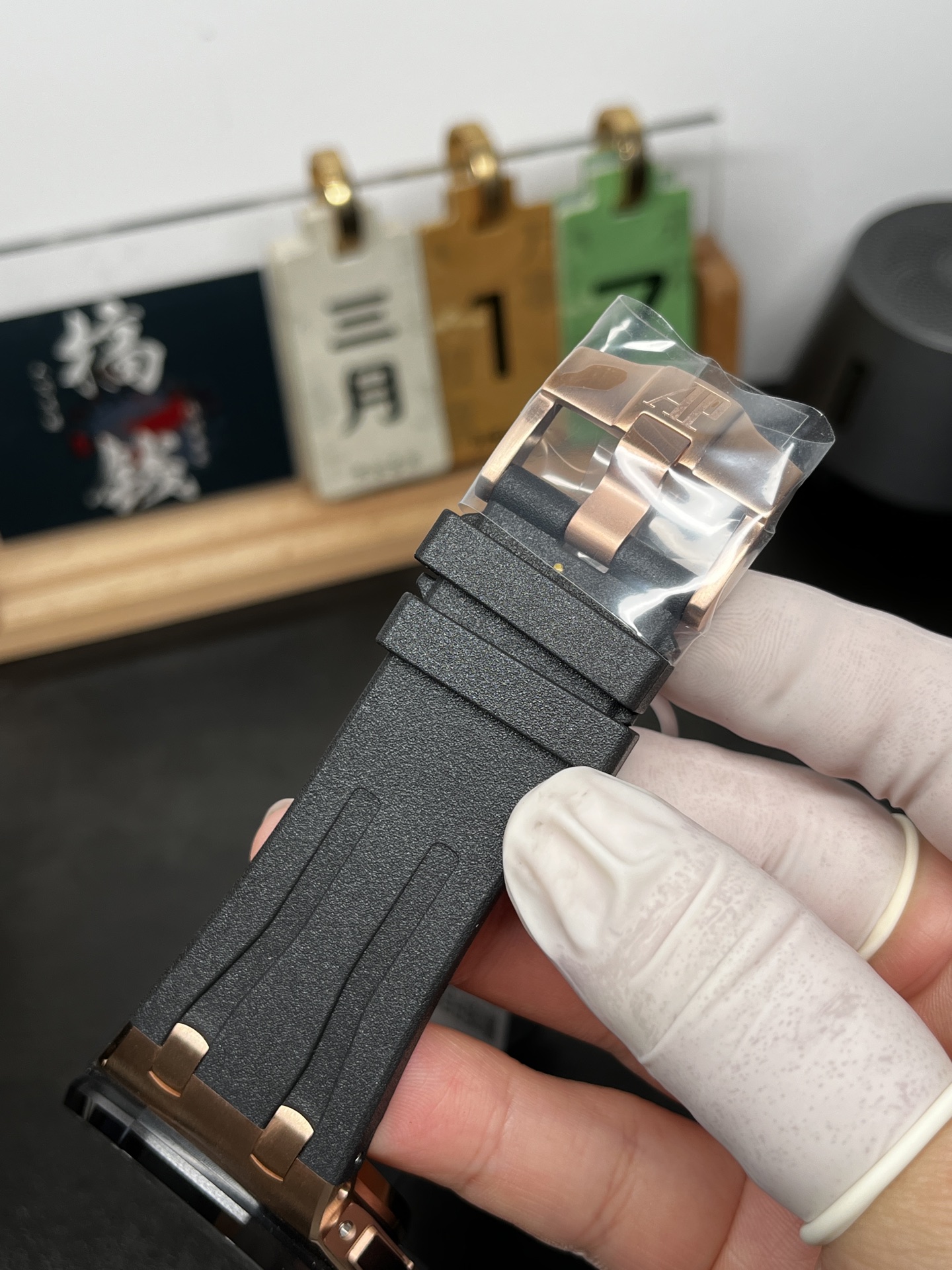
LS Factory uses an imported fluoroelastomer strap — FKM rubber, essentially the same material specification used by high-end watchmakers for their sport strap offerings. Fluoroelastomer is softer and more supple than standard silicone rubber, more resistant to sweat and UV degradation, and carries a more premium tactile quality on the wrist. It’s the kind of detail that you feel rather than see, but it contributes substantially to the overall wearing experience.
Putting It All Together: The Honest Assessment
What LS Factory has built with this upgraded Royal Oak Offshore is a replica that takes the right problems seriously. The dial texture — historically the first and most obvious failure point of any Audemars Piguet replica — is now manufactured through a process that actually produces the correct result. The steel is the right grade. The ceramic is real ceramic. The crystal is sapphire. The strap is proper fluoroelastomer.
Is it a genuine Audemars Piguet Royal Oak Offshore? No. Nothing in this review suggests otherwise, and anyone representing it as such is being dishonest. But as a showcase of how far replica manufacturing has come in addressing the genuinely difficult technical challenges of a complex luxury sports watch, this piece represents a serious benchmark. The CNC-milled dial alone justifies the attention — and for collectors who understand what that texture is supposed to look like, it’s the most convincing execution currently available in the market.
The Royal Oak Offshore is one of the most demanding canvases in replica watchmaking. LS Factory has studied the brief carefully, invested in the right manufacturing processes, and delivered something that holds up to scrutiny in all the places that matter most.