When Fire Meets Ice: Two Daytona Customs That Rewrite the Rules
There are replica watches, and then there are statements. The two pieces landing on the bench today — the skeleton “Jack-O’-Lantern” Daytona in gold and the LB2 “Polar Glacier” Daytona in arctic blue — represent something genuinely rare in the replica space: custom interpretations that don’t simply copy an existing reference but push the design language of the Rolex Daytona into territories the Geneva manufacture itself has never dared to explore. Strap in. This is a technical teardown worth your full attention.
Part One: The Skeleton “Jack-O’-Lantern” Daytona — Gold as Bone, Fire as Soul
The Visual Philosophy — Structured Chaos in 18K Gold Tone
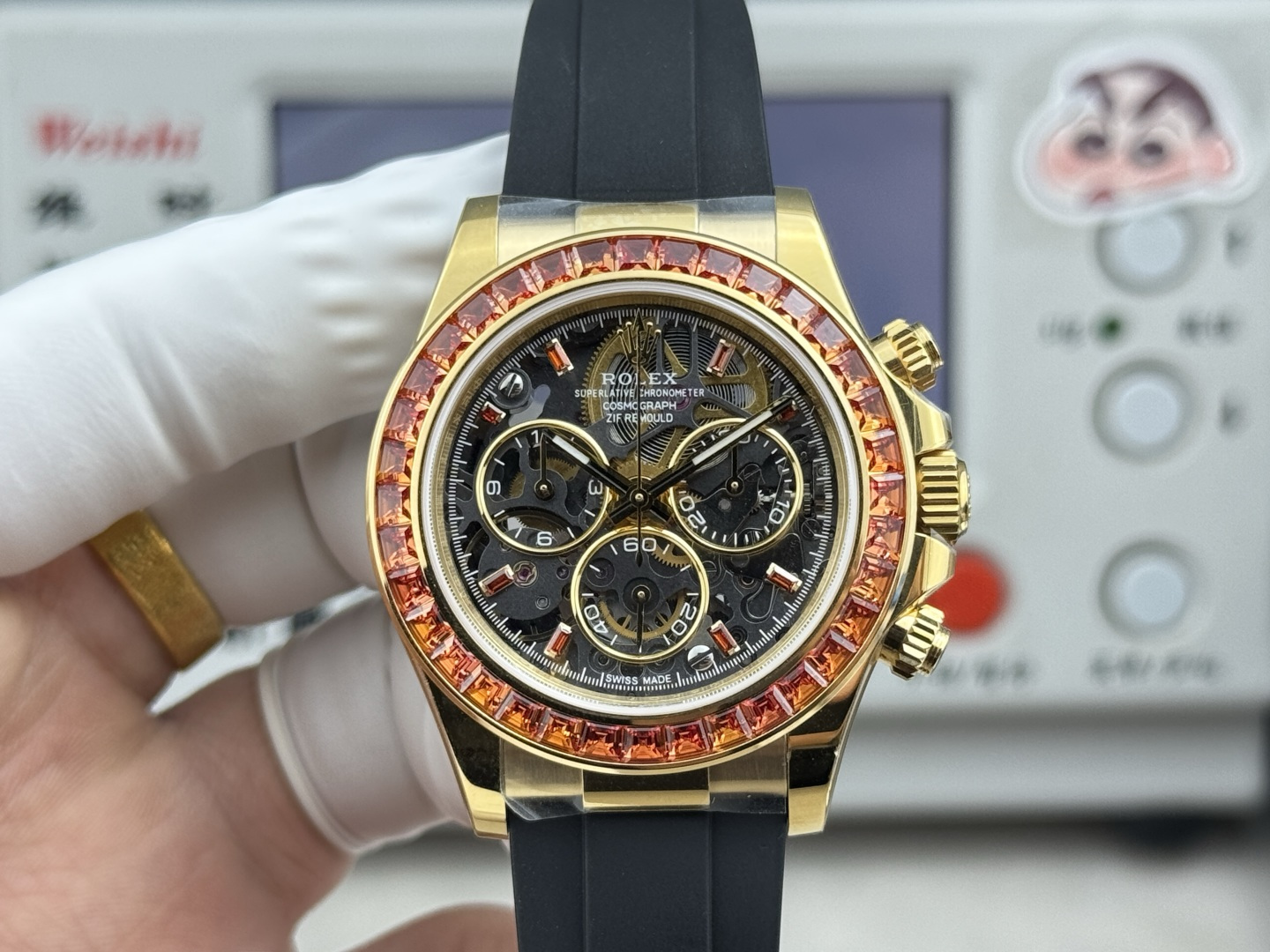
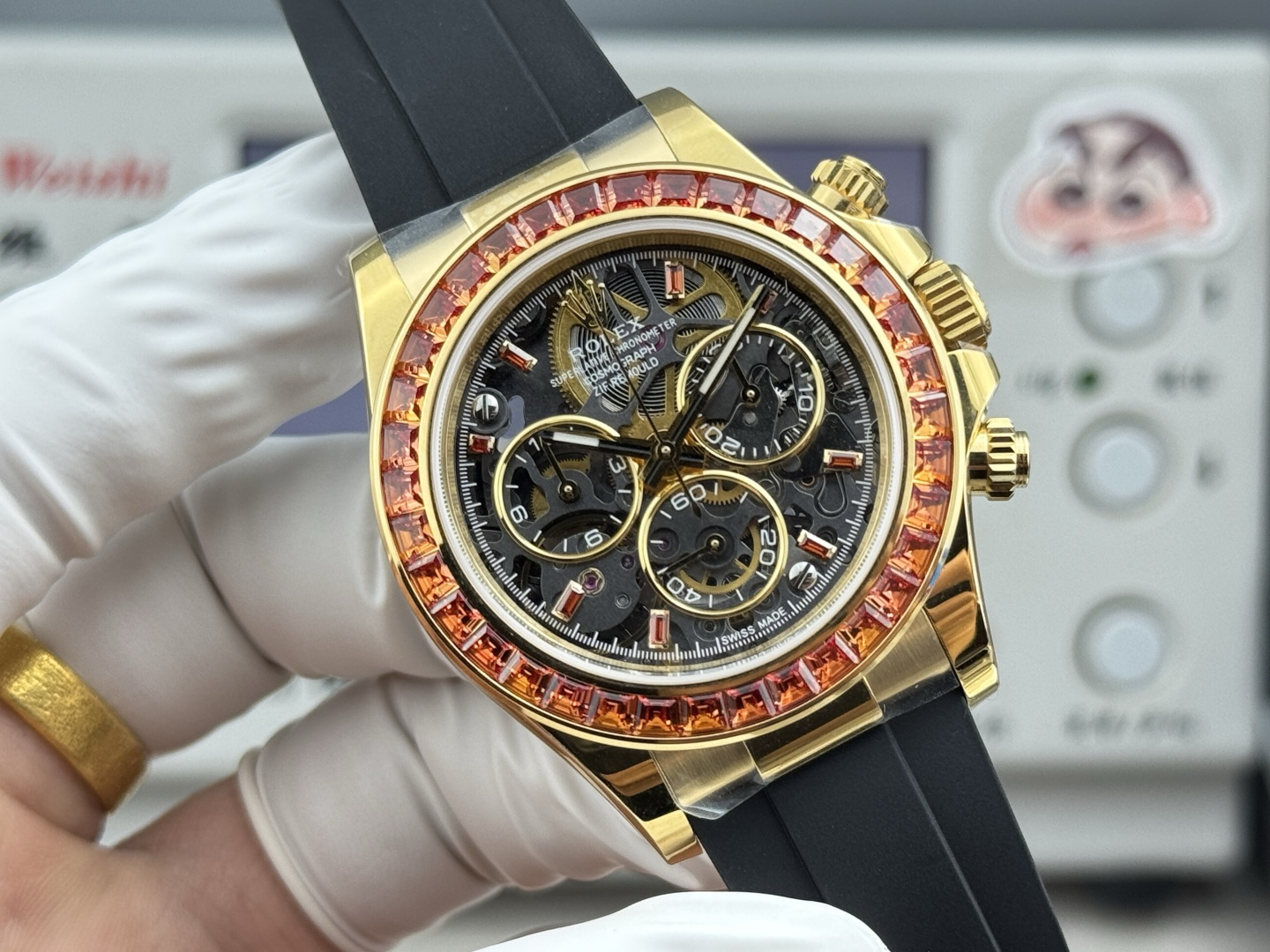
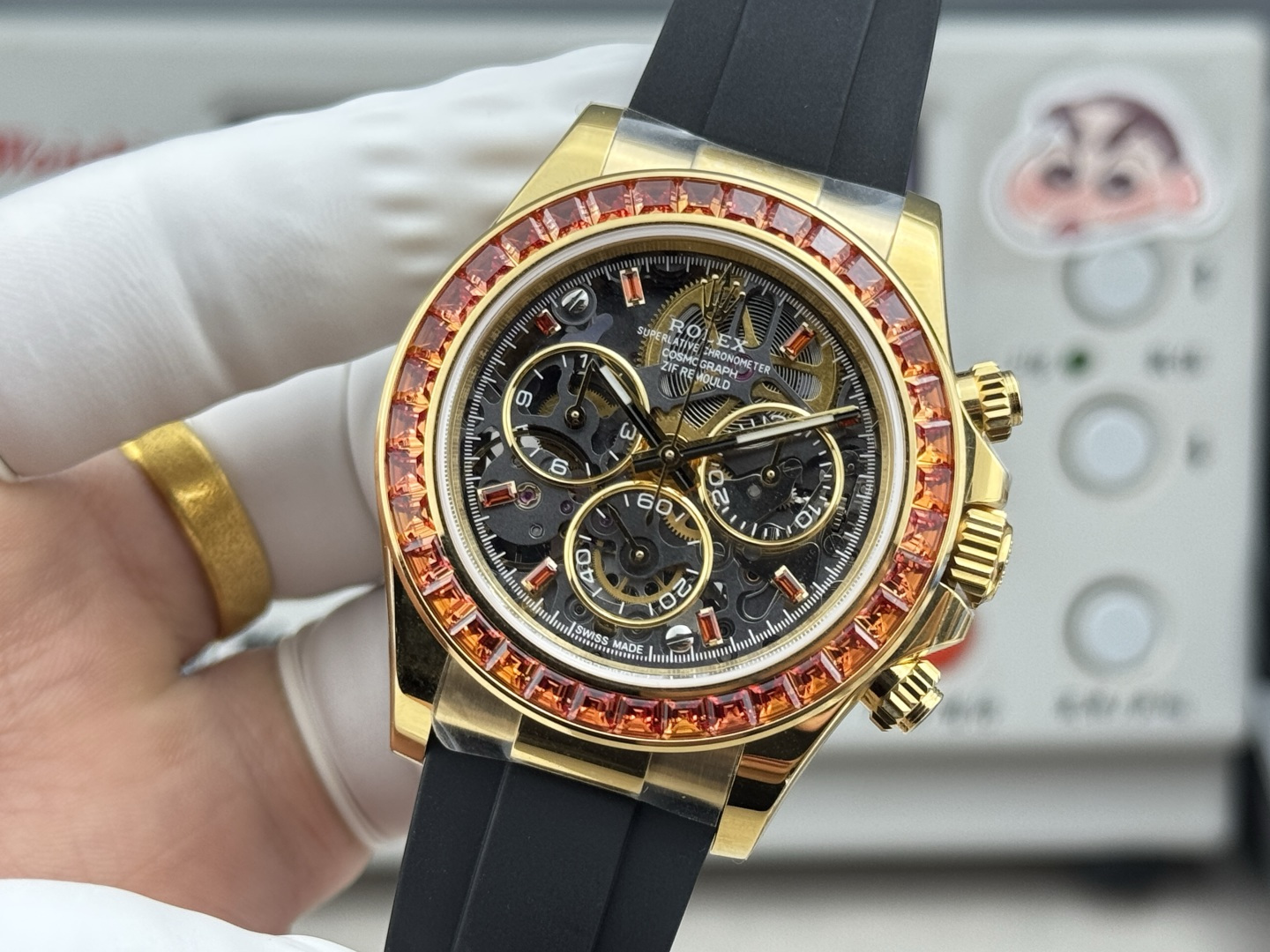
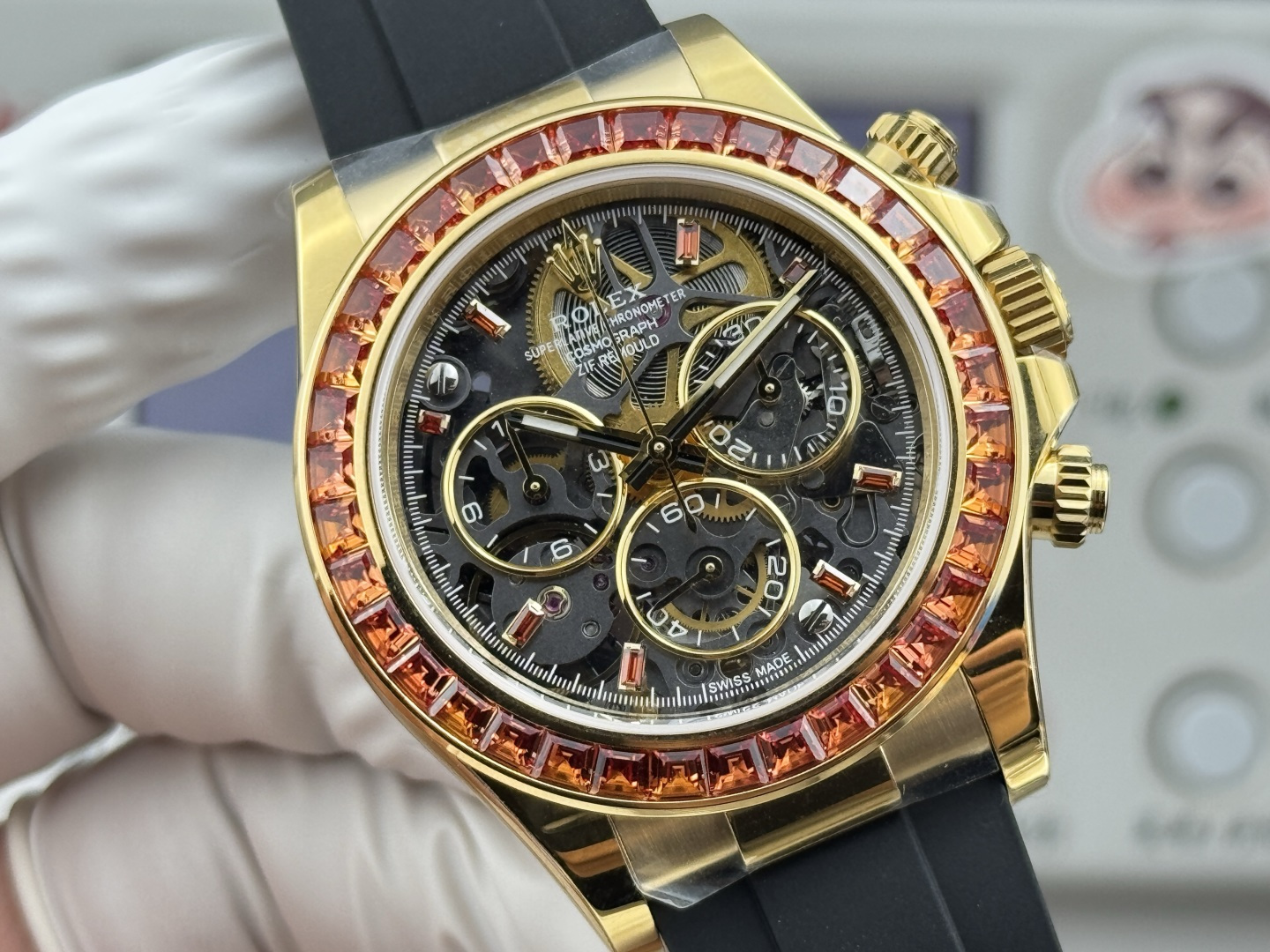
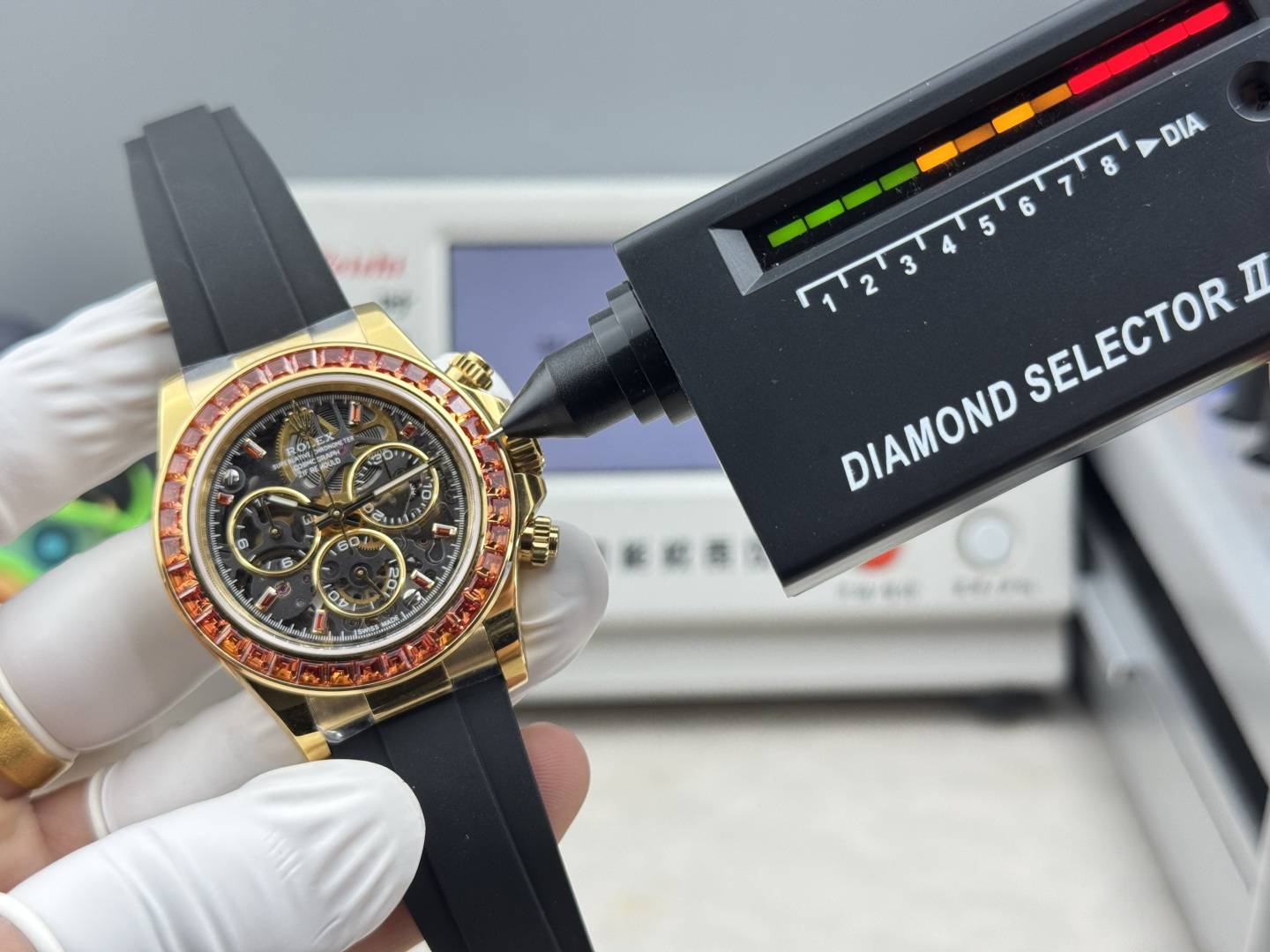
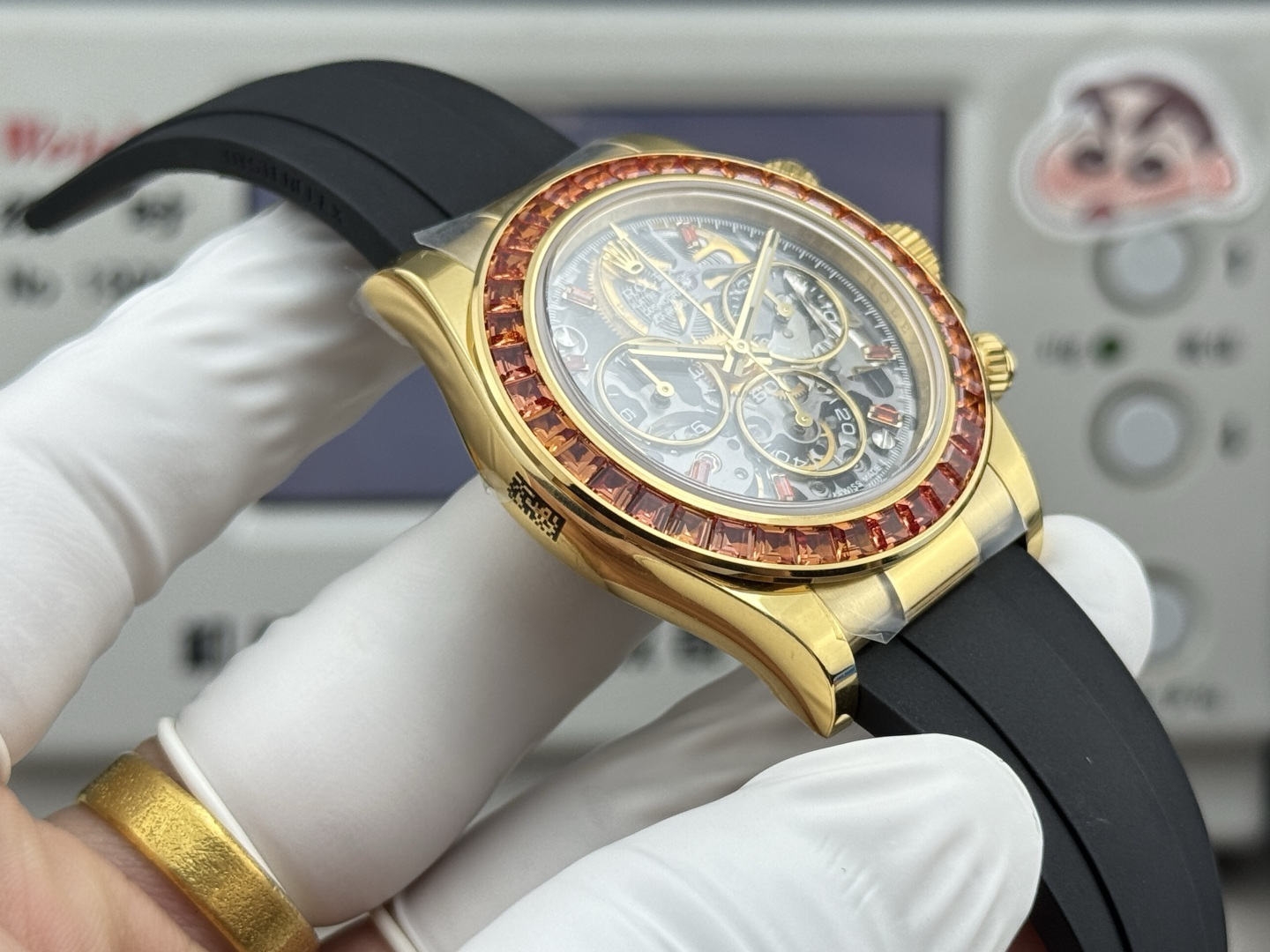
The nickname “Jack-O’-Lantern” is not accidental. When light catches the skeletonized dial at the right angle, the open architecture of the movement glows from within like a carved pumpkin with a candle burning at its core. Gold is the skeleton. Fire is the bezel. Every bridge, every pillar, every exposed gear train becomes a rib of illuminated architecture. This is horological theater at its most unapologetic.
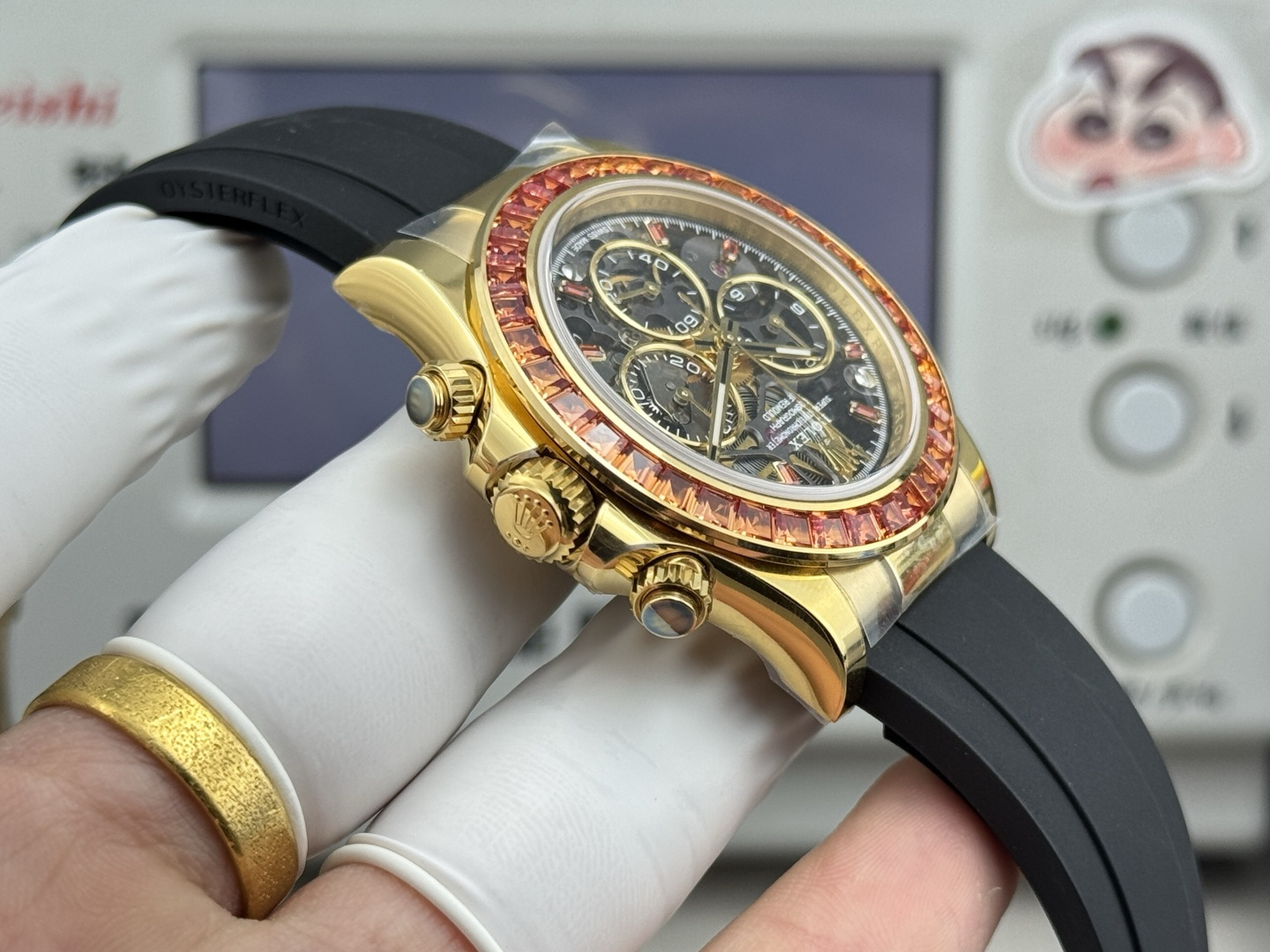
The case is rendered in a deep, warm yellow-gold PVD finish — not the brassy, flat coating you see on budget pieces. The layering here has depth, almost an organic warmth that shifts between champagne and amber depending on the light source. The Oystersteel substrate underneath has been machined to Daytona specification, meaning the case proportions — the pump pushers, the screw-down crown, the stepped bezel profile — are all dimensionally correct before a single micron of gold is deposited.
Movement Architecture — The Heartbeat Exposed
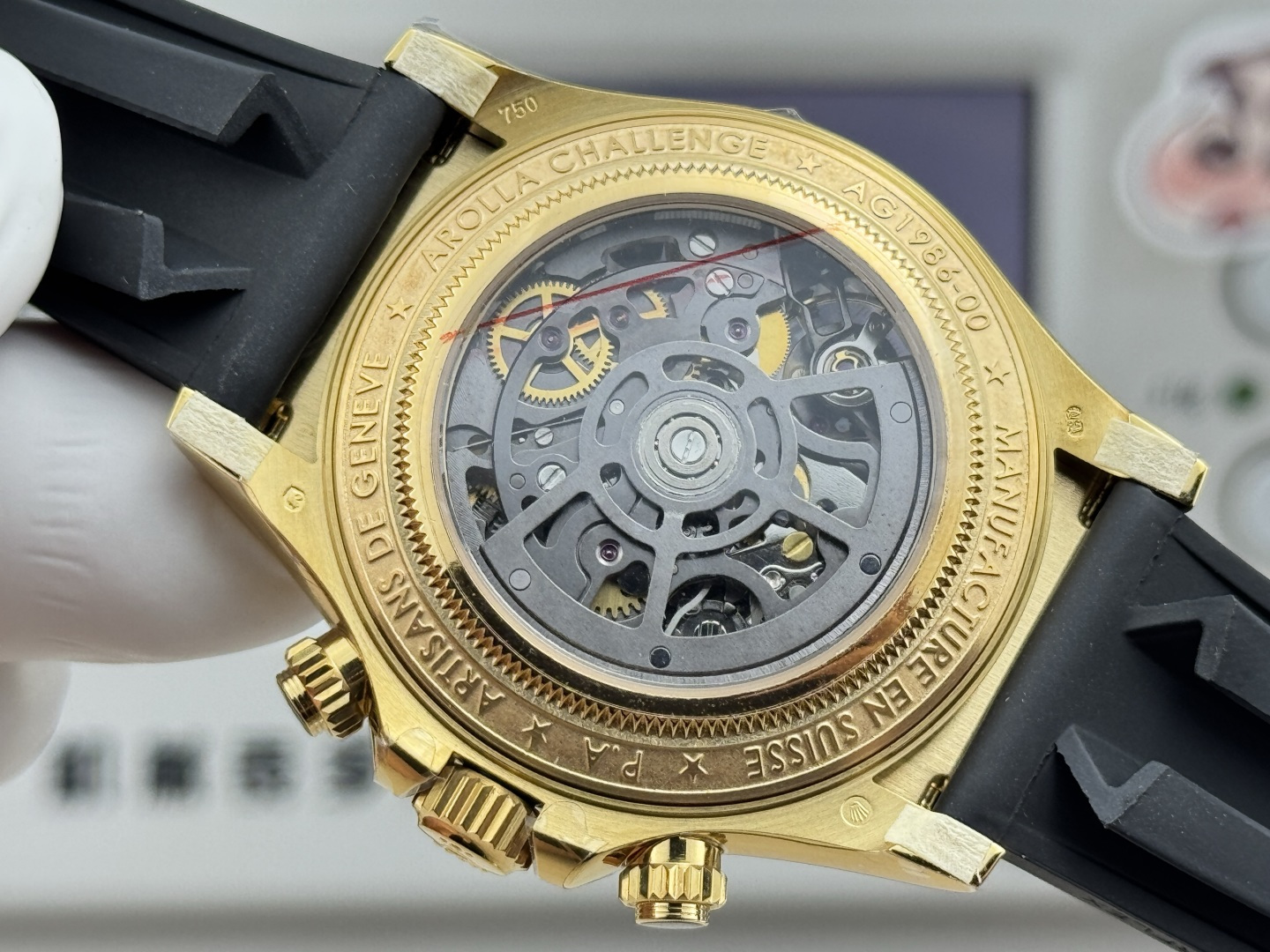
Here is where the Jack-O’-Lantern earns its place in a serious technical conversation. The movement powering this piece has been subjected to aggressive CNC skeletonization — material has been removed from the main plate and bridges in a pattern that is simultaneously structural and aesthetic. This is not simply drilling holes through a base movement. The removal follows load paths; the remaining metal is calculated to maintain rigidity while maximizing the visual drama of the open dial.
Under magnification, the edges of the skeletonized bridges reveal anglage work — beveled and polished chamfers running along every cut edge. This is the detail that separates a genuine skeleton exercise from a hack job. Sloppy skeletonization leaves raw, burred edges that catch the light harshly. Here, the transitions between polished bevel and brushed flat surface are consistent and deliberate, indicating a finishing pass that went well beyond the minimum viable standard.
The oscillating weight, where present, has been similarly treated — spokes rather than a solid rotor, with each spoke edge finished to match the bridge work below. Gear train visibility is exceptional. You can trace the entire power transmission from the barrel to the escape wheel with the naked eye, watching the literal heartbeat of the watch in the form of the pallet fork’s back-and-forth impulse. For anyone who has ever wanted to understand how a mechanical watch actually works, this dial is a masterclass.
Dial & Indices — Where Wealth Announces Itself
The sub-dial rings — chronograph seconds at nine, minutes at three, hours at six — are retained in the classic Daytona configuration, but rendered here in a contrasting tone that pops against the gold architecture. Applied hour markers catch light independently of the movement below, creating a layered luminosity that draws the eye through multiple focal planes simultaneously. This is a watch you don’t glance at. You study it.
Part Two: The LB2 “Polar Glacier” Daytona — Mechanical Precision Meets Arctic Depth
The Color Story — Every Shade of Deep Blue
If the Jack-O’-Lantern is fire, the LB2 “Polar Glacier” Daytona is the silence under arctic ice. The blue deployed here is not a single flat hue — it is a graduated, multi-layered application that moves from near-black at the case edges through a rich midnight navy to an almost electric cerulean at the center of the dial. In direct sunlight, it is breathtaking. In low light, it retreats into a deep, contemplative darkness that makes the watch feel simultaneously technical and meditative.
The “Polar Glacier” designation is earned. The dial texture — and this is critical — is not smooth. There is a subtle, almost topographical grain applied to the base layer that mimics the fractured, crystalline surface of glacial ice. This texture interacts with the applied indices and sub-dial rings to create micro-shadows that shift as the wrist moves. It is, frankly, the kind of detail that photographs cannot fully capture. You need to hold this piece in natural light and rotate it slowly.
Case Construction — CNC Tolerances Under the Microscope
The LB2 designation signals a specific level of case finishing ambition. The Daytona case geometry is among the most demanding in replica production — the interplay between the polished center links, the brushed outer surfaces of the bracelet, the polished bevels on the lug edges, and the satin-finished case flanks requires a multi-step machining and finishing process with tight tolerances at every stage.
On this piece, the CNC work is immediately apparent in the sharpness of the lug tips. On lower-tier Daytona replicas, the lug tips are rounded, almost blob-like — a consequence of insufficient material removal or inadequate finishing. Here, the tips are defined, with a crisp edge that terminates cleanly. The transition from the brushed top surface of the lug to the polished inner face is a sharp, consistent line running the full length of both lugs. This single detail is one of the most reliable indicators of case quality, and this piece passes without reservation.
The tachymeter bezel — black ceramic on this configuration — sits flush and level with zero perceptible wobble. The engraved numerals are crisp and uniformly deep, filled cleanly with white lacquer. The bezel click is firm and positive, with none of the mushiness that plagues mid-tier production.
The Bracelet — Where Most Replicas Lose the Plot
The Oyster bracelet on the Polar Glacier deserves its own paragraph because bracelet quality is the single most common failure point in Daytona replicas at any price level. The three-link Oyster configuration requires each center link to be independently brushed with directional grain running longitudinally, while the outer links carry a full mirror polish. Maintaining that distinction consistently across every link, across the full bracelet length, is genuinely difficult manufacturing work.
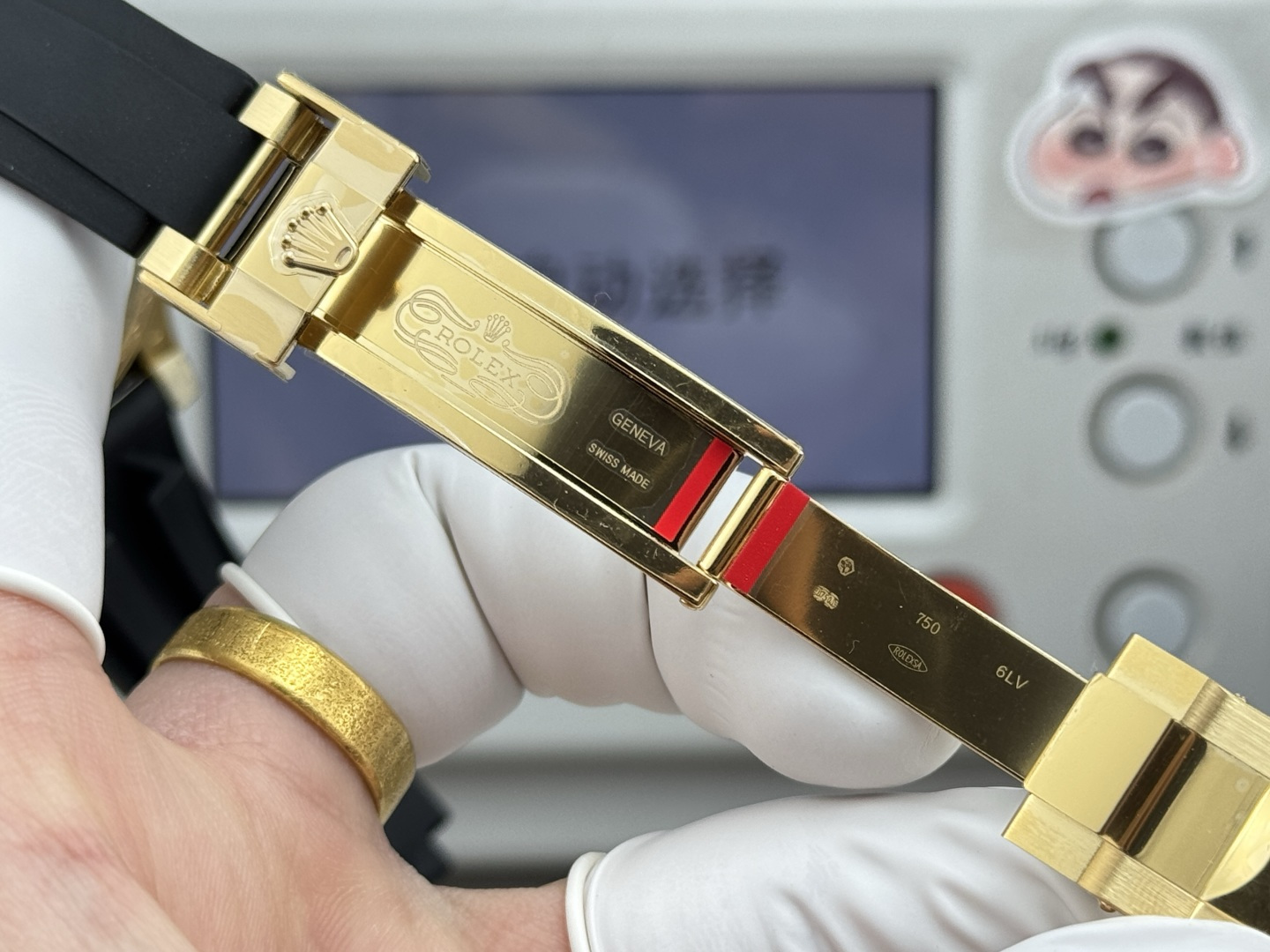
On this piece, the distinction is maintained. The brushed center links show consistent, fine-grain texture with no polishing bleed-over from the adjacent links. The clasp — a folding Oysterclasp with the Rolex crown logo — operates with the kind of solid, dampened click that communicates quality before you ever look at the dial. The micro-adjustment extension, often a weak point on replica clasps, engages and disengages cleanly without the grinding or sticking that indicates poor tolerancing.
Shared DNA — What Both Pieces Get Fundamentally Right
The Daytona Proportion Problem — Solved
One of the most persistent issues in Daytona replica production is case thickness. The genuine Daytona is a surprisingly slim watch for a chronograph — just over 12mm — and achieving that profile while housing a properly functioning chronograph movement requires precise case engineering. Both the Jack-O’-Lantern and the Polar Glacier nail the side profile. From the three o’clock position, the case taper is correct, the lug curvature follows the genuine arc, and the overall wrist presence matches expectation. These are not thick, chunky approximations. They wear like the real thing.
Pushers, Crown, and Functional Feedback
The pump pushers on both pieces operate with the correct resistance and travel distance. This matters more than most buyers realize — the feel of the chronograph start/stop and reset functions is something you interact with every time you use the watch, and mushy or stiff pushers are a constant reminder of compromise. Here, the resistance is calibrated, the travel is defined, and the reset snaps back with authority. The screw-down crown engages the threads smoothly and locks down with appropriate torque.
Final Assessment — Art Pieces With a Technical Conscience
Both the skeleton “Jack-O’-Lantern” Daytona and the LB2 “Polar Glacier” Daytona represent the upper tier of what custom Rolex replica production can achieve in the current market. They are not conservative pieces. They are not for the buyer who wants to blend in. They are for the collector who understands that a watch can be simultaneously a mechanical instrument and a piece of wearable sculpture — and who refuses to accept that those two qualities must exist in separate price brackets.
The Jack-O’-Lantern burns bright. The Polar Glacier runs deep. Both keep exceptional time. And both will generate conversations that no stock-configuration replica ever could.